

The Mindset of Transformational Leadership
Transformational leadership starts with mindset, self-awareness, and the courage to evolve — not just a new business plan.
Leadership ideas for executives who want lasting impact.
Three essays for senior leaders: how you think in the role, how you speak when the organisation is moving, and how a culture still performs after the campaign ends. Coaching, when it is useful, is a place to think — not a promised result.
Transformational leadership starts with mindset, self-awareness, and the courage to evolve — not just a new business plan.

In uncertain times, leadership isn’t about having all the answers. It’s about having a vision worth following.

Lasting performance isn’t a product of systems — it’s a reflection of leadership culture.
If the pressure is personal — identity, control, the gap between the title and how you actually decide — start with the mindset of transformational leadership. If the organisation is moving and people need a story they can repeat, open lead with vision in times of change. If performance is high but brittle, read building high-performance cultures that last.
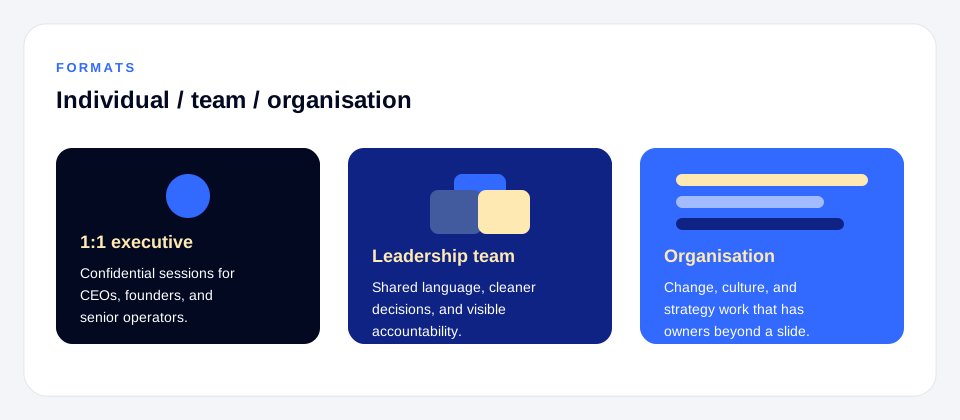
None of these pieces replace a live conversation. If you already know the work is 1:1, team, or a change programme, say so when you write to us.
| Essay | The question it answers | Adjacent work |
|---|---|---|
| Transformational mindset | What has to change in the leader first? | 1:1 executive coaching |
| Vision in change | What can people actually follow this week? | Organisational transformation |
| Cultures that last | What still happens when the slide deck is closed? | Team development |
The mindset essay is for the gap between a title and how you actually decide. The vision essay is for a change people cannot yet repeat. The culture essay is for performance that looks strong until the slide deck closes. None of them is a substitute for a live brief, and none of them promises that reading will change Monday.
The useful test after you read one is small. Can you name the decision you have been postponing? Can you say the change in one sentence a director could repeat? Can you point to a habit that still happens when nobody is performing “culture”?
If the answer is yes, the next step is usually a conversation — 1:1, a leadership team, or a live organisational change — with owners and a date you are willing to review. A short note about the role, the problem, and what useful would look like in ninety days is enough to start.